

Foragery is very different from forgery, though I must confess that it’s a stretch of the English language. Most would probably prefer the term “Foraging.” And I can further concede that foragery, or foraging, might feel like a cheat code — harvesting free food produced in the wild, with very little in the way of human involvement — but I believe that it’s actually one of the most honest things that a human could do. I’ve learning a lot about it lately, partly through my own experimentation and partly through the guidance of some friends.

This afternoon, my friend Lauren led some people from our church on a brief “Berry Walk,” as it’s currently the season for black raspberries in Northeast Ohio. We learned where to find them and how to judge their ripeness. And we had fun figuring things out together. We didn’t collect buckets and buckets full of black raspberries, but I had enough for a little snack.

And while we were at it, I decided to pluck a cluster of staghorn sumac berries to try out a drink recipe that I’ve heard about previously. It’s sort of like an iced tea, or lemonade: cold-steeped, better with a little bit of extra sweetener (like honey). I let my staghorn sumac drink steep overnight, in the refrigerator. And then I strained it with a coffee filter in the morning.
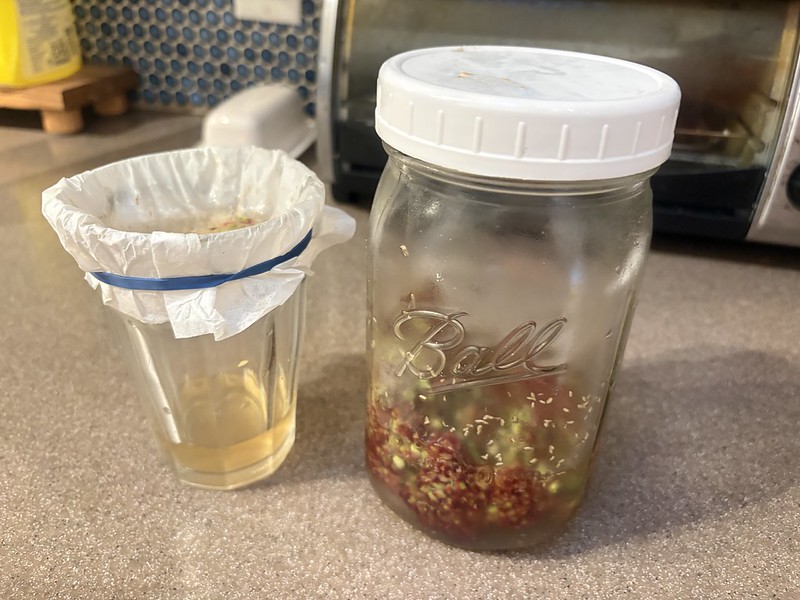
I saved it for an afternoon refresher, as the summer temperatures soared. And it ended up tasting pretty good! Very much like a fruity iced tea. I’m not sure if it was worth the amount of work that it took me to make a single glass of this staghorn sumac drink: the original act of foragery… the muddling of the berries… the straining. But it was a good learning experience.

I would recommend my recipe to others: one cluster of staghorn sumac berries (muddled) per cup of cold water, with a teaspoon of honey (or more or less, depending on individual preferences). One night of steeping, followed by straining… and voila! A refreshing summer beverage! Here’s to continued learning about foragery!